
Improved, modernized Paramedic Services dispatch system now coming to Essex-Windsor EMS by Sept. 2026
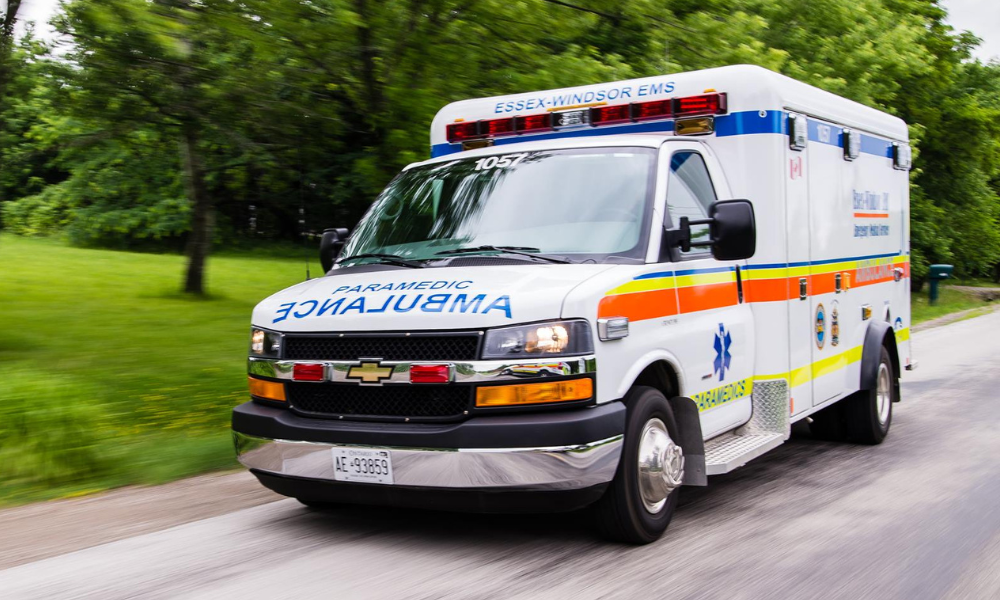
Essex-Windsor EMS has been fast-tracked by the Ontario Ministry of Health to switch to a new, cutting-edge ambulance dispatch system sometime between June and September of this year.
The coming Medical Priority Dispatch System (MPDS) is designed to ensure that paramedics are dispatched more efficiently, and more quickly, to the most urgent, life-threatening emergencies. MPDS will replace the latest version of the Dispatch Priority Card Index (DPCI) system, currently in place.
“This change is significant,” Essex-Windsor EMS Chief Justin Lammers said. “MPDS is designed with one clear purpose: to make sure that people experiencing life‑threatening emergencies receive help as quickly as possible.”
About a dozen other paramedic services in Ontario have already made the switch to MPDS – including Ottawa, Mississauga, Waterloo Region and Kingston. More are queued up. The Ministry of Health decided to fill a recently created summer 2026 vacancy in its province-wide MPDS rollout by moving up Essex-Windsor EMS from its previously scheduled February 2027 switchover.
“We are thankful for that, as this system improves accuracy, consistency and safety,” Lammers said. “It ensures that someone who is experiencing an emergent and life-threatening event – such as a person in cardiac arrest, a complete airway obstruction, or someone who is unconscious – receives an ambulance ahead of someone with a non-life-threatening injury, such as a car-accident victim with minor injuries, or an allergic reaction with mild symptoms. That’s the right thing for any community, and it’s the right thing for ours.”
The hallmark of MPDS is it allows all Ambulance Communications Officers (ACOs) working within the Windsor Central Ambulance Communication Centre (CACC) to better triage emergency calls – thanks to software that relies on decades of medical research and practical evidence.
“The people who answer your 911 call will now gather more detailed information right at the start,” Lammers said. “They’ll ask more questions than you maybe had been used to. That’s intentional. Those questions help determine the true urgency of the situation, so that ambulances can be sent where they are needed most, when they are needed most.
“But I want to be transparent about what this means. Because MPDS prioritizes calls based on urgency, patients with non‑life‑threatening conditions will, at times, wait longer for an ambulance — especially during periods when paramedic resources are stretched. This isn’t a flaw in the system; it’s the system working exactly as intended to protect lives and preserve critical EMS resources for the people who need them most. And we all want that.”
A specific rollout date for MPDS will be announced once it is known.
“We really want to thank the Ministry of Health for fast-tracking us into MPDS,” Lammers said. “It’s a tried-and-true system working very well across Ontario.”
Contact Us
County of Essex
360 Fairview Ave W, Essex ON N8M 1Y6
Telephone: 519-776-6441
TTY: 1-877-624-4832
Fax: 519-776-4455
coeinfo@countyofessex.ca
Stay Informed
Subscribe to receive email notifications of our news notices and announcements.